
Your child gets irritated by the sound of the mixer, refuses to wear a shirt because of the tag, or melts down at the shoe shop. Or opposite, your child never stops spinning, jumping, and crashing into the sofa.
You might consider this fussy or naughty and scold your child sometimes due to it, but it may actually be sensory processing difficulty.
What Is Sensory Processing Difficulty?
Our brain receives information all day through sound, touch, light, taste, and movement. Sensory processing difficulty happens when a child's brain has trouble receiving that information and responding to it. Some children feel too much. Others feel too little and go looking for more.
It has nothing to do with discipline or parenting. The child's brain is handling the world differently.
Signs of Sensory Overload
- Sound and food: Covers ears in noisy places. Gets very upset over certain food textures.
- Touch and messy play: Avoids sand, paint, and finger play. Shows extreme discomfort with shoe fitting, clothing tags, or certain fabrics.
- Movement seeking: Constantly spins, jumps, or crashes into furniture.
Many children show one or two of these on and off. Watch for the pattern. If it happens daily and affects eating, dressing, play, or school, it's time to ask for help.
How Sensory Integration (SI) Helps
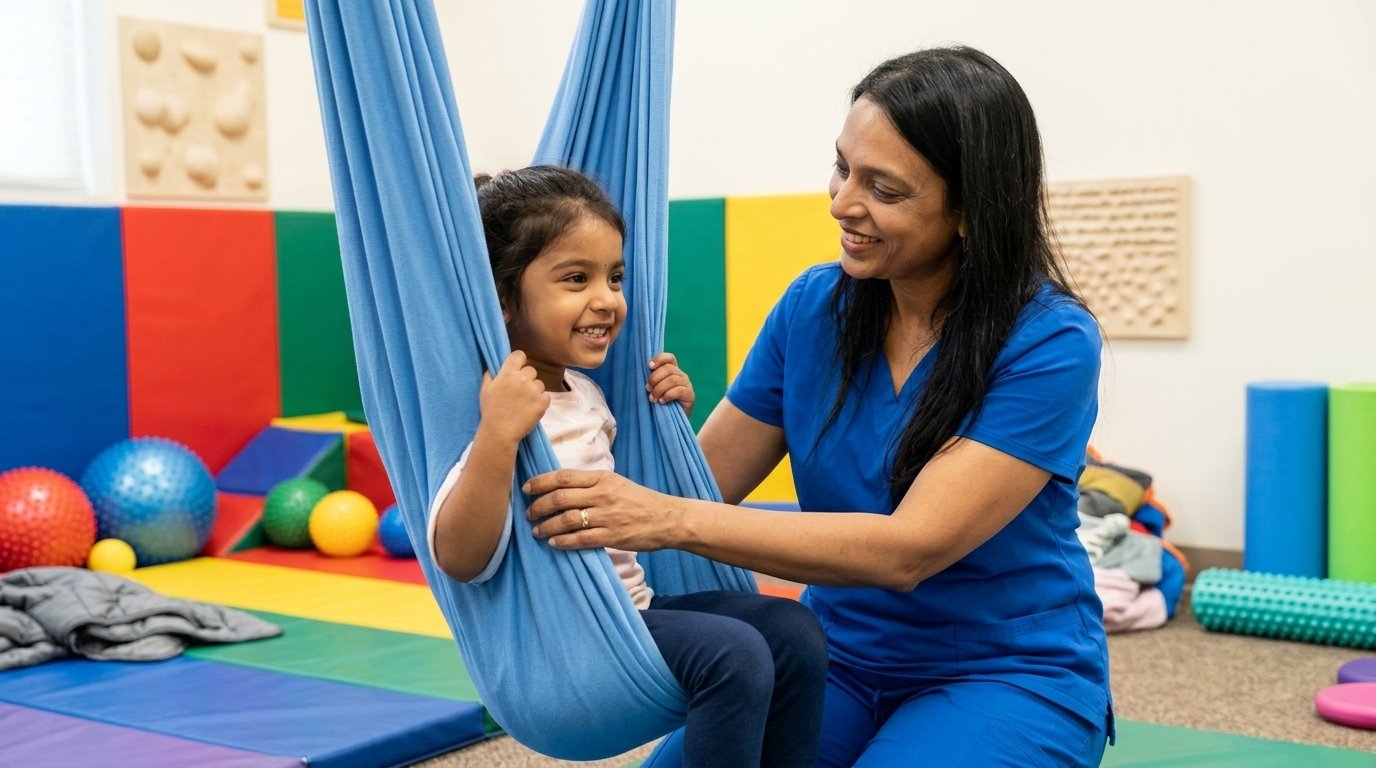
Sensory Integration therapy helps the brain get better at handling sensory input. An occupational therapist uses structured, playful activities so the child slowly becomes more comfortable with the things that used to bother them. Over time, everyday tasks like getting dressed, eating, and playing with other children become easier.
Small Things You Can Try at Home
- Give your child a quieter space to calm down after a noisy day.
- Introduce new textures slowly, and never force them.
- Let them choose comfortable clothes, and cut out the tags.
- Offer safe outlets for movement, like a jumping session or a park visit.
These won't replace therapy, but they make daily life smoother while you wait for an assessment.
Sensory Care at Privya Clinic in Ahmedabad
At Privya Clinic in Ahmedabad, every child starts with a detailed developmental assessment. The team looks at how your child responds to sound, touch, movement, and daily routines. Then they build a plan around what your child needs.
That support may include:
- Occupational Therapy
- Behaviour Therapy
- Special Education
Parents are part of this too. At Privya Clinic in Panchavati, you get simple activities to use at home, so the progress continues after the session ends.
What to Do Next
Don't wait, thinking your child will get used to it. Early support matters, and with the right help, children feel more comfortable and confident. Trust your instinct. If something feels off, ask.
Book a consultation at Privya Clinic in Panchavati, CG Road, Ahmedabad.
